Every year, as the rains arrive in Hyderabad, DermaGlow sees a sharp rise in walk-ins for one complaint: “My skin was fine until the monsoon started.” If that sounds familiar, you’re not imagining it humidity really does change how your skin behaves, and it can trigger two very different problems that often get treated the same way (incorrectly).
Why Monsoon Is Tough on Your Skin
Hyderabad’s monsoon brings a mix of heat and humidity that keeps skin damp for longer through the day. Sweat doesn’t evaporate as quickly, pollutants and rainwater sit on the skin, and oil glands often overcompensate all of which clog pores and create the perfect environment for both acne-causing bacteria and fungus to thrive.
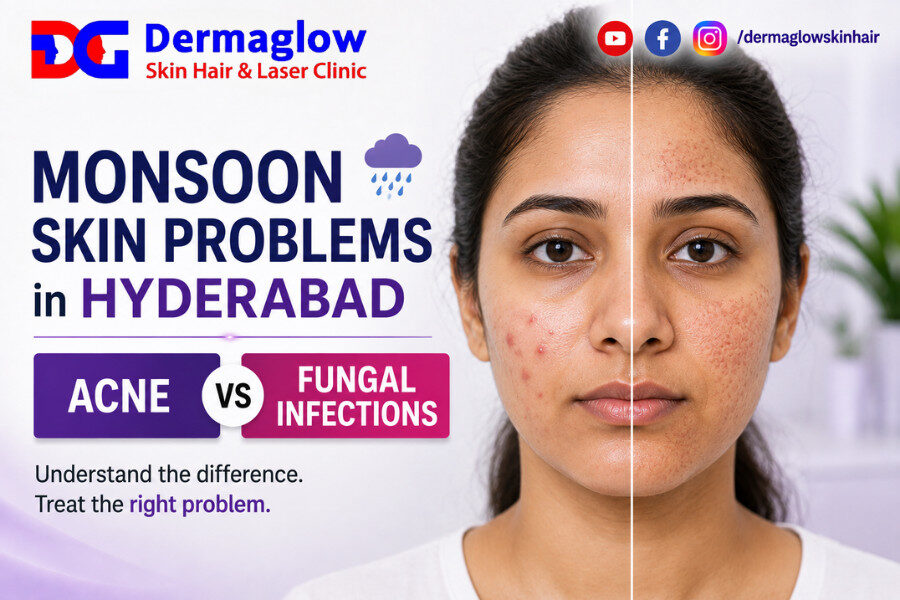
Acne vs Fungal Acne: They’re Not the Same Thing
This is the mix-up we see most often in clinic.
Regular (bacterial) acne shows up as red, inflamed pimples of different sizes, often with visible pus. It tends to cluster around the chin, jawline, and forehead.
Fungal acne (Malassezia folliculitis) looks deceptively similar but behaves differently small, uniform, itchy bumps that appear in clusters, usually on the chest, back, and upper arms, and that don’t respond to regular acne creams. Using standard anti-acne treatments on fungal acne often makes it worse.
Why the distinction matters: bacterial acne needs anti-bacterial or retinoid-based treatment, while fungal acne needs anti-fungal treatment. Using the wrong one for months is the #1 reason patients tell us “nothing has worked.”
Other Monsoon Skin Issues We See at DermaGlow
- Intertrigo chafing and fungal rash in skin folds (underarms, under breasts, groin) from prolonged dampness
- Athlete’s foot and fungal rashes from wet shoes and socks
- Contact dermatitis from rainwater mixed with road pollutants
What Actually Helps
1. Get a proper diagnosis first. A quick dermoscopy exam at DermaGlow can tell bacterial acne from fungal acne instantly this alone saves most patients weeks of using the wrong product.
2. Medical-grade cleansers, not just “gentle face wash” you need something that controls oil without stripping the skin barrier.
3. In-clinic treatments such as medical facials and targeted peels help control breakouts faster than home care alone, especially for stubborn or recurring cases.
4. Keep skin dry between showers towel-dry skin folds properly, and change out of damp clothes as soon as possible.
5. Don’t self-medicate with steroid creams bought over the counter they can mask fungal infections and make them spread further, which we see often after weeks of self-treatment.
When to See a Dermatologist
If your breakouts aren’t responding to regular treatment within 2 weeks, are spreading, or are intensely itchy rather than just inflamed, it’s worth getting it looked at properly rather than guessing further.
DermaGlow Skin & Hair Clinic offers dermoscopy-based diagnosis and monsoon-specific treatment plans for acne, fungal infections, and skin fold rashes. Book a consultation this week and get ahead of the season before it gets worse.