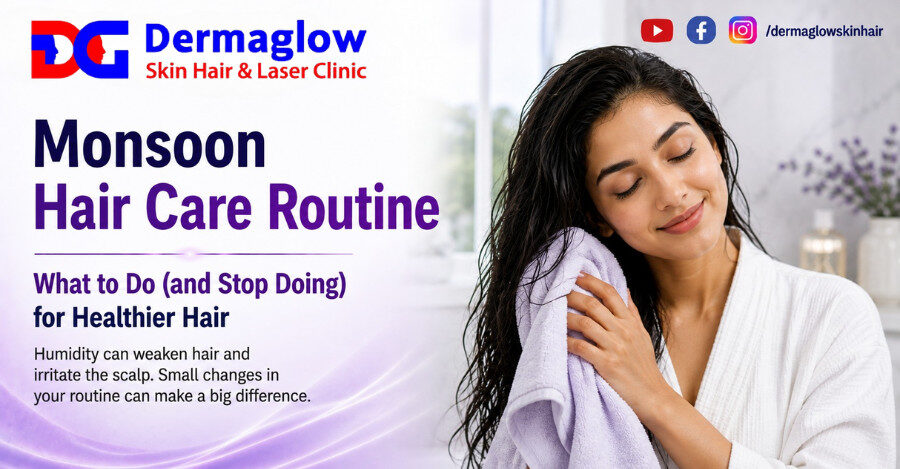
You don’t need a complicated 10-step routine to get through monsoon with healthy hair — you need the right handful of habits, done consistently. Here’s what we actually recommend to patients at DermaGlow.
Do: Wash More Mindfully, Not More Often
Contrary to instinct, washing hair every single day during monsoon can strip natural oils and irritate the scalp further. Two to three times a week with a mild, sulfate-free shampoo is usually the sweet spot — adjust slightly if your scalp is very oily.
Don’t: Tie Up Wet Hair
This is one of the biggest monsoon mistakes we see. Tying damp hair traps moisture against the scalp for hours, creating ideal conditions for fungal growth and weakening hair at the roots. Always let hair air-dry or blow-dry on low heat before tying it up.
Do: Dry Your Scalp, Not Just Your Hair
People towel-dry the visible hair but skip the scalp itself, especially along the parting and behind the ears — exactly where dampness lingers longest and causes the most irritation.
Don’t: Share Combs, Towels, or Pillowcases
Fungal scalp infections spread easily through shared items, and monsoon is peak season for exactly that.
Do: Oil Your Hair But Wash It Off Properly
Oiling is genuinely helpful for a dry, flaky scalp, but leaving oil in for days combined with humidity creates a breeding ground for buildup and fungal issues. Oil, leave for a few hours, then wash out thoroughly.
Don’t: Ignore Persistent Itching or Flaking
It’s tempting to write off scalp itchiness as “just monsoon,” but if it’s persisting beyond 2–3 weeks despite a clean routine, it’s worth getting checked rather than assuming it will pass on its own.
Do: Adjust for Your Scalp Type
- Oily scalp: lighter, gel-based or clarifying products; wash slightly more often
- Dry/flaky scalp: richer conditioners focused on lengths, medicated shampoo if flaking persists
- Color-treated hair: sulfate-free formulas to protect both color and moisture balance
If your scalp issues go beyond what a good routine can fix, DermaGlow Skin & Hair Clinic offers scalp diagnosis and treatment for monsoon-specific hair and scalp problems. Book a consultation to get a routine built for your actual scalp type.