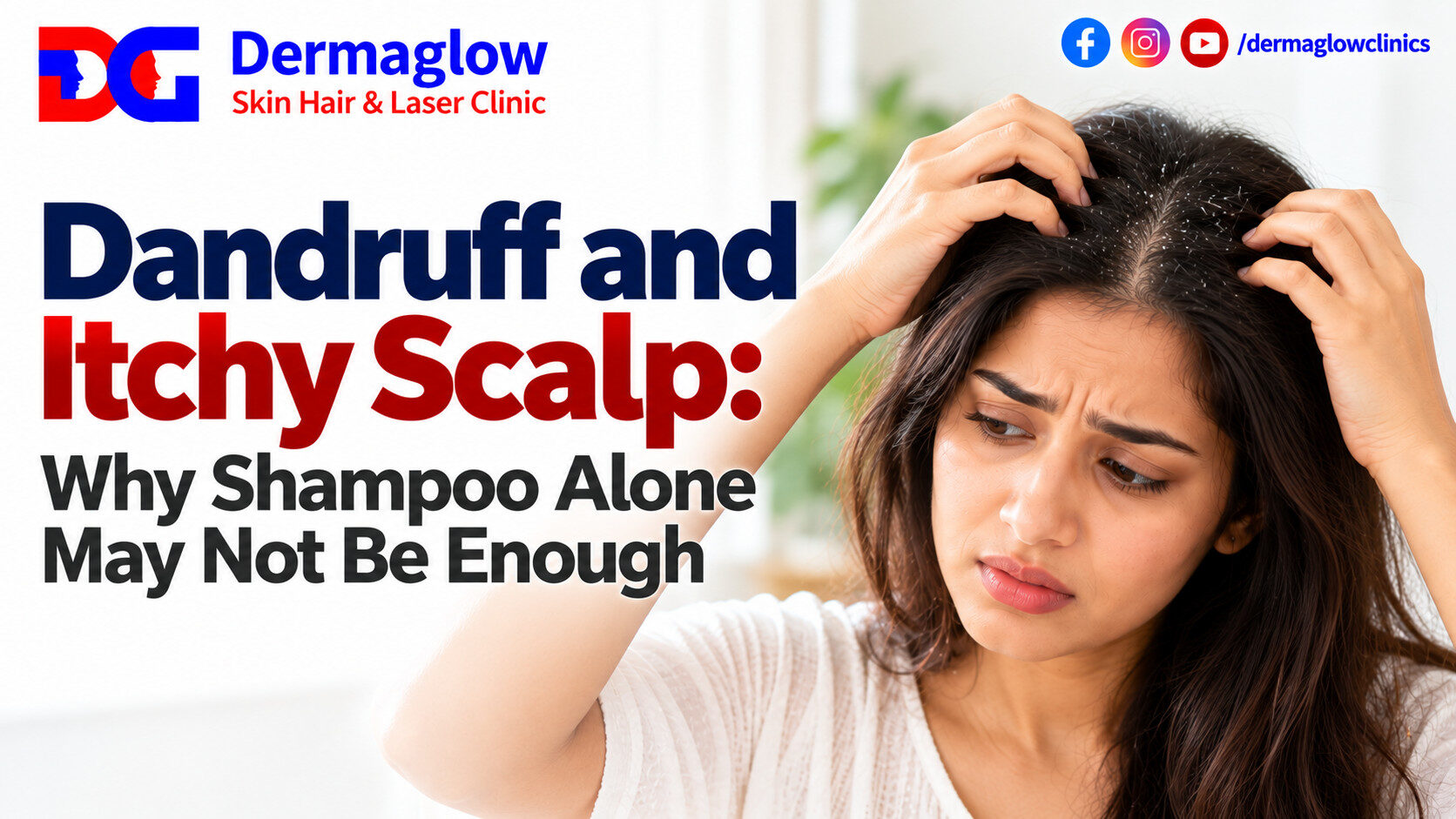
Flakes on your shoulders, an itchy scalp that distracts you through the day and a dark outfit you are afraid to wear: dandruff is common, but it is also frustrating, especially in Hyderabad’s humid months. Many people keep switching shampoos without lasting relief. Understanding what is actually happening on your scalp makes treatment far more effective.
Dandruff or dry scalp?
Dandruff flakes are usually larger, slightly oily or yellowish, and come with itching and sometimes redness. Dry scalp flakes are smaller and white, with a tight, dry feeling, and often appear alongside dry skin elsewhere. The treatments are different, which is why a correct diagnosis matters.
What causes dandruff?
- Malassezia yeast: A yeast that lives on most scalps and can trigger irritation and flaking when it overgrows.
- Seborrheic dermatitis: A common inflammatory condition that causes greasy flakes and redness on the scalp, eyebrows and sides of the nose.
- Humidity, sweat and oil: Warm weather and infrequent washing allow oil and yeast to build up.
- Stress, poor sleep and hormonal changes: These can trigger or worsen flare-ups.
- Product build-up or sensitivity: From styling products, heavy oils or harsh shampoos.
Conditions that look like dandruff
Scalp psoriasis causes thick, silvery plaques with well-defined edges. A fungal infection of the scalp (tinea capitis) can cause patchy hair loss and is more common in children. Contact dermatitis from hair dyes or products causes burning, redness and swelling, and head lice also cause itching. If the scalp is painful, has pus, or is losing hair in patches, do not self-treat.
What actually helps
Medicated shampoos are the first line of treatment. Look for ingredients such as ketoconazole, zinc pyrithione, selenium sulfide, salicylic acid or coal tar. They control yeast, reduce inflammation or loosen flakes. How you use them matters:
- Massage the shampoo into the scalp, not just the hair.
- Leave it on for three to five minutes before rinsing.
- Use it two to three times a week at first, then once a week for maintenance.
- Rotate between two shampoos if one stops working as well.
- Follow with a light conditioner on the hair lengths only.
For stubborn or inflamed scalps, a dermatologist may prescribe a short course of a medicated lotion or other treatment. Clinic-based scalp care can also support the scalp, particularly when dandruff comes with hair fall.
Dandruff in teenagers and children
Teenagers often get dandruff because of hormonal oil production, while very young babies can have cradle cap, a harmless form of seborrheic dermatitis. Children with patchy flaking and hair loss should see a doctor quickly, because fungal scalp infections are more common in this age group and need proper treatment.
Hyderabad-specific triggers
- Helmets and caps: Sweat trapped under a helmet or cap encourages yeast growth. Keep them clean and dry, and wash your scalp after long rides.
- Humid evenings and the gym: Rinse sweat from the scalp rather than letting it dry in.
- Hard water: Mineral build-up can leave the scalp dry and flaky, and an occasional clarifying wash can help.
- Dust and pollution: Wash your hair regularly if you commute daily.
A sample weekly scalp routine
- Two fixed days a week: medicated shampoo, left on for three to five minutes.
- Other wash days: a gentle, regular shampoo.
- Between washes: avoid scratching, and keep the scalp dry after workouts.
- Weekly: wash combs and brushes, and change pillowcases.
Habits that make dandruff worse
- Scratching with your nails, which damages the skin and invites infection
- Heavy oiling on a flaky scalp, which can feed yeast in some people
- Washing too rarely, especially in humid weather
- Using very hot water
- Sharing combs, towels and caps
Dandruff myths
Dandruff does not come from “dirty hair” alone. It is a skin condition influenced by yeast, oil and your own sensitivity. Curd, lemon and other kitchen remedies can irritate the scalp and rarely solve the problem.
Dandruff and hair fall: the connection
Persistent inflammation and constant scratching can weaken hair and increase shedding. Treating the scalp properly often reduces hair fall as well. If you have both, a scalp examination can save you months of trial and error.
When to see a dermatologist
See a doctor if you do not improve after four weeks of regular medicated shampoo, if you notice redness, painful sores, thick plaques or patches of hair loss, or if flare-ups keep coming back. A correct diagnosis is the quickest route to lasting relief.
Key takeaways
- Dandruff is a manageable skin condition, not a hygiene failure.
- Use a medicated shampoo properly: massage it in, leave it for three to five minutes and use it regularly.
- Rule out look-alike conditions if the scalp is painful, thickly scaled or losing hair.
- See a dermatologist if there is no improvement after four weeks.
Frequently asked questions
Is dandruff contagious?
No. Dandruff cannot be passed from person to person. Some other scalp conditions can spread, which is another reason to get persistent problems checked.
Can dandruff cause hair fall?
Severe, untreated dandruff and constant scratching can weaken hair and increase shedding. Treating dandruff usually improves this.
How often should I wash my hair if I have dandruff?
Most people do well washing two to three times a week. If your scalp is oily or you sweat a lot in humid weather, you may need to wash more often with a gentle shampoo.
Can stress cause dandruff?
Stress does not cause dandruff directly, but it can trigger flare-ups in people who are prone to it.
Are anti-dandruff shampoos safe to use for a long time?
Most are safe for regular use as directed. Some can be drying, so use a conditioner on the lengths and ask your dermatologist about long-term maintenance.