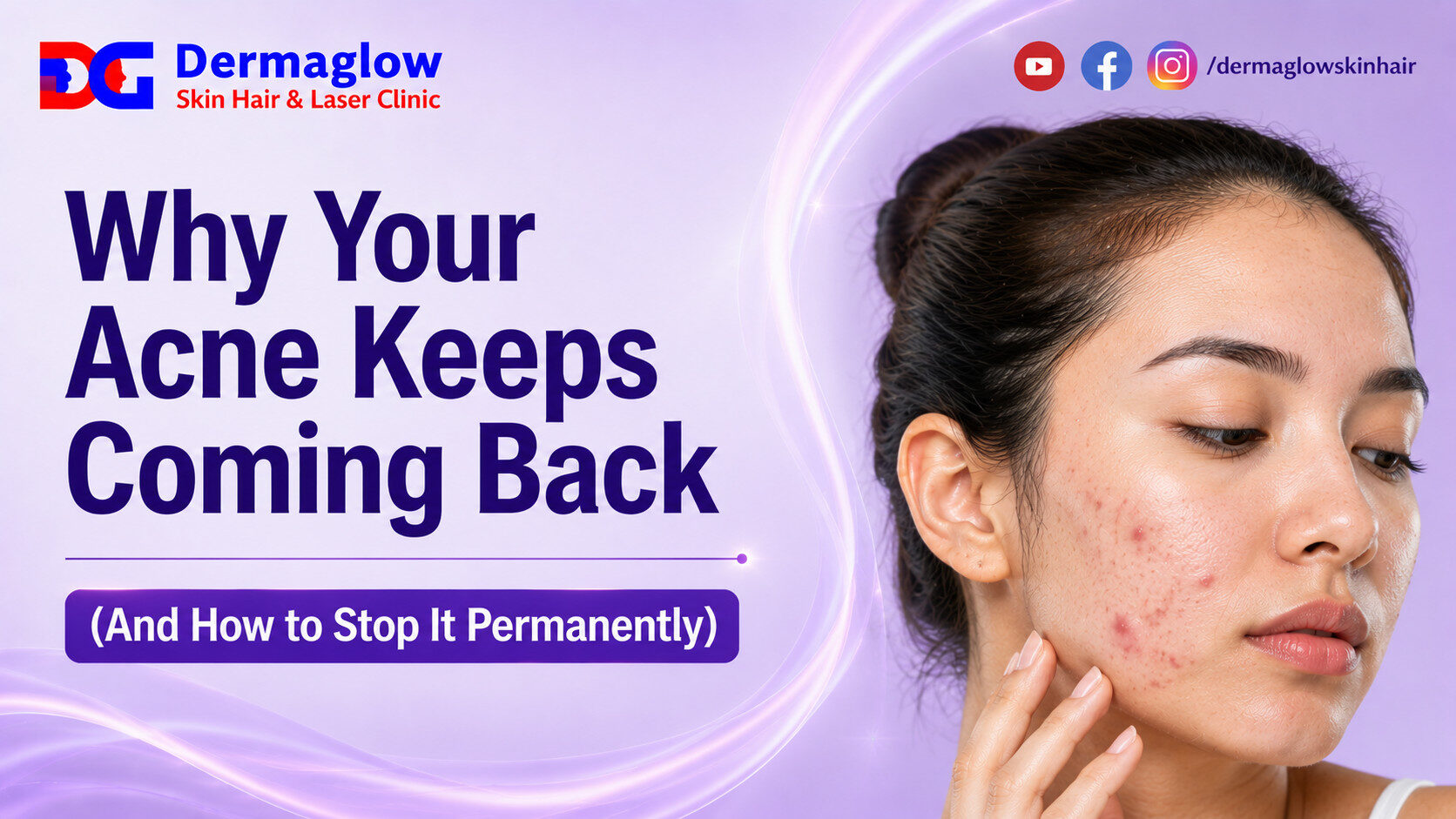
You’ve tried countless face washes, creams, and home remedies. Your acne clears up for a week or two and then it’s back. If this cycle sounds painfully familiar, you’re not alone. Recurring acne is one of the most frustrating skin conditions to deal with. But there’s a reason it keeps returning and once you understand that reason, you can actually stop it.
Acne Is Not Just a Skin Problem
This is the most important thing to understand: acne is a systemic condition. It doesn’t just happen on the surface of your skin. It involves your hormones, gut health, immune system, diet, stress response, and genetics. Treating only the surface with face washes or topical creams rarely addresses the underlying cause. That’s why it keeps coming back.
According to the American Academy of Dermatology, acne involves four key processes: excess oil production, clogged hair follicles, bacteria (C. acnes), and inflammation.
7 Real Reasons Your Acne Keeps Coming Back
1. Hormonal Imbalances
Hormones especially androgens like testosterone directly stimulate the sebaceous glands to produce more oil. In women, acne flare-ups often coincide with the menstrual cycle, PCOS, or thyroid imbalances. In men, elevated testosterone during puberty and beyond drives persistent breakouts.
Signs your acne may be hormonal:
- Appears mainly on the jawline, chin, and cheeks
- Worsens before your period
- Accompanied by irregular cycles, weight gain, or facial hair growth
- Doesn’t respond well to topical treatments alone
2. Using the Wrong Products
Many people unknowingly use products that clog their pores (comedogenic ingredients) or strip their skin barrier, triggering more oil production as a rebound effect. Ingredients to avoid in acne-prone skin include:
- Coconut oil
- Isopropyl myristate
- Lanolin
- Silicones (in heavy moisturizers)
- Physical scrubs that damage the skin barrier
3. Diet and Gut Health
There is growing evidence linking diet and acne. A study published in the Journal of the American Academy of Dermatology found that high-glycemic diets (white rice, sugar, refined flour) and dairy consumption can worsen acne by increasing insulin and IGF-1 levels, which stimulate oil glands.
Gut dysbiosis (imbalance of gut bacteria) also appears to drive systemic inflammation that manifests as acne.
4. Stress
Stress triggers the release of cortisol, which increases oil production and systemic inflammation — both of which fuel acne. Many patients notice their skin breaks out during exams, deadlines, or emotionally difficult periods. Without addressing stress management, acne treatment is incomplete.
5. Stopping Treatment Too Early
Acne treatments whether topical retinoids, antibiotics, or clinic procedures take time to work. Most patients see results in 6–12 weeks, but stop when they notice initial improvement or mild side effects. Incomplete treatment allows acne to return stronger than before, sometimes with antibiotic-resistant bacteria.
6. Not Getting a Proper Diagnosis
Not all acne is the same. There are different types comedonal, inflammatory, cystic, nodular and each responds differently to treatment. Additionally, conditions like perioral dermatitis, rosacea, and folliculitis are commonly mistaken for acne. Treating the wrong condition will always fail.
7. Ignoring Post-Acne Care
Acne marks, scars, and post-inflammatory hyperpigmentation (PIH) attract patients to pick and pop which introduces bacteria, causes more inflammation, and creates deeper scars. Without a proper scar management plan, the skin never fully heals.
Effective Treatments to Stop Acne Permanently
At DermaGlow Clinics, we take a root-cause approach to acne. This means identifying why YOUR acne keeps recurring and addressing it at multiple levels.
1. Medical Management
Topical retinoids: (tretinoin, adapalene) — regulate cell turnover and prevent clogged pores
Oral antibiotics: (short-term, for inflammatory acne)
Oral isotretinoin: the gold standard for severe, recurrent cystic acne
Hormonal therapy: (oral contraceptives or anti-androgens for hormonal acne in women)
Metformin: for PCOS-related acne
2. Chemical Peels for Acne
Salicylic acid, glycolic acid, and TCA peels exfoliate clogged pores, kill acne bacteria, and reduce inflammation. Regular peels also minimize active breakouts and fade post-acne marks. Explore our peel treatments here.
3. LED Light Therapy
Blue light (415nm) kills acne-causing bacteria; red light reduces inflammation and promotes healing. A painless, zero-downtime option ideal for mild to moderate inflammatory acne.
4. Intralesional Injections
Cortisone injections directly into large, painful cysts can reduce inflammation and size within 24–48 hours. Particularly useful for patients with nodular or cystic acne before a big event.
5. Acne Scar Treatment
After active acne is controlled, we address scarring with:
Microneedling / RF Microneedling: for atrophic (depressed) scars
Fractional CO2 Laser:for deeper, boxcar or ice-pick scars
Chemical peels: for mild surface scarring and hyperpigmentation
Subcision: for tethered, rolling scars
6. Gut & Hormone Assessment
We assess your blood work (hormones, insulin, thyroid) and refer to gynecologists or endocrinologists when needed. A holistic approach to acne management is often the difference between temporary and permanent results.
Lifestyle Changes That Make a Real Difference
– Switch to a low-glycemic diet: whole grains, legumes, vegetables, lean protein
– Limit dairy (particularly skim milk, which has higher IGF-1 activity)
– Drink 2–3 litres of water daily
– Never sleep with makeup on
– Change your pillowcase every 2–3 days
– Avoid touching your face with unwashed hands
– Manage stress with exercise, breathing techniques, or therapy
– Wear sunscreen daily sun exposure worsens post-acne pigmentation
Meet Our Acne Specialists
Dr. S. Sumanth Yadav
Founder & Chief Dermatologist | Dermato Surgeon
Dr. Sumanth has managed thousands of acne cases ranging from teenage breakouts to severe adult cystic acne. He takes a systematic approach — ruling out hormonal, dietary, and microbiological factors before designing a treatment protocol. His thorough follow-up ensures that patients stay clear long after their initial treatment.
Dr. N. A. Tejaswitha Gudivada
Consultant & Aesthetic Dermatologist | Dermato Surgeon
Dr. Tejaswitha is particularly experienced in managing acne in women, where hormonal fluctuations play a dominant role. She combines aesthetic expertise with medical precision to not only clear acne but also minimize the scarring and pigmentation that it leaves behind. Her patients consistently report improved confidence alongside clearer skin.
Why Choose DermaGlow Clinics for Acne Treatment in Hyderabad?
✅ Root-Cause Treatment: We don’t just suppress breakouts. We find and fix why they keep returning.
✅ Full Spectrum of Treatments: Medical, laser, chemical, and procedural options all available.
✅ Hormonal & Lab Assessment: We go beyond skin deep when needed.
✅ Dedicated Follow-Up :We monitor your progress and adjust treatment as your skin responds.
✅ Expert Dermato-Surgeons: Led by specialists who manage thousands of acne cases.
✅ Clinics at Kothapet & Bandlaguda, Hyderabad — easily accessible.
Take the First Step Toward Clear Skin
If your acne keeps coming back despite trying everything, it’s time to stop guessing and start treating it properly. [Book a consultation at DermaGlow Clinics](https://www.dermaglowclinics.com/contact) and let our experts find the real reason behind your breakouts.
Clear skin is possible. It just needs the right approach.
📍 Kothapet & Bandlaguda, Hyderabad
📞 Call or WhatsApp to Book